
|
|
|||
A WSPC Reference on Biomineralization |
Kontakt/Bestellung
Contact/Order: info@digento.de 
|
|
Hrsg. v. Peter Fratzl |
|
|
Online |
|
|
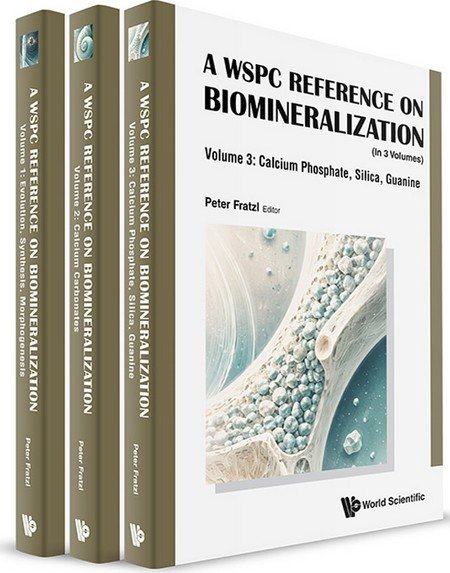
Inhalt :: Content Umfassendes Referenzwerk, das eine systematische Übersicht über die Mechanismen, Strukturen und evolutionären Grundlagen der Biomineralisation bietet. Unter Biomineralisation versteht man den Prozess, bei dem lebende Organismen feste Minerale bilden, um bestimmte Funktionen zu erfüllen. Es dokumentiert den aktuellen Forschungsstand darüber, wie lebende Organismen anorganische Minerale kontrolliert synthetisieren, um biologische Verbundmaterialien wie Knochen, Zähne oder Schalen zu bilden. Das Werk verknüpft dabei die molekularen Grundlagen der biologischen Gestaltbildung mit den physikalischen und mechanischen Eigenschaften der resultierenden Strukturen. Der Online-Ausgabe liegt die 2026 veröffentlichte, 3-bändige Printausgabe zugrunde. |
 |
|
Verlag :: Publisher World Scientific Publishing |
|
|
Preis :: Price Preise auf Anfrage / Prices on request
|
|
|
Das Angebot richtet sich nicht an Verbraucher i. S. d. § 13 BGB und Letztverbraucher i. S. d. PAngV. |
|
|
ISBN/ISSN 978-981-98-2970-5 Bestellnummer bei digento :: digento order number 10593204 |
|
|
Verlagsinformation :: Publisher's information This book explores how biominerals fulfill a wide range of functions in living organisms. Foremost, they stiffen endoand exoskeletons of many animals. The bone of vertebrates is a collagen-based organic matrix reinforced by calcium phosphate nanoparticles. Some vertebrates that lack a bony skeleton, such as sharks and rays, use calcium phosphate to form calcified tesserae covering the cartilaginous skeleton. Calcium carbonate and other minerals reinforce the exoskeleton of many crustaceans, not only for protection but also to provide efficient tools, such as the crab pincer. Sea shells are generally based on calcium carbonate, mainly calcite and aragonite.
Volume 2: Calcium Carbonates focuses on calcium carbonate, one of nature's most versatile and widespread biominerals. This volume examines how organisms from mollusks to birds harness calcium carbonate to build shells, skeletons, and protective structures with remarkable precision and diversity. Chapters trace the molecular and cellular mechanisms behind mollusk and brachiopod shell formation, explore the contrasting strategies of octocorals and hexacorals, and reveal the morphodynamics that shape precious red coral. The volume also highlights calcite morphogenesis in coccolithophores — microscopic architects of the oceans — and uncovers the intricate processes that give rise to the avian eggshell. Bringing together perspectives from biology, chemistry, and earth sciences, this volume offers a detailed exploration of how calcium carbonate structures emerge, function, and evolve across species. It is an indispensable reference for researchers and students studying biomineralization, evolutionary biology, and the materials of life. Volume 3: Calcium Phosphate, Silica, Guanine delves into the remarkable diversity of biominerals beyond calcium carbonate, with a focus on calcium phosphate, silica, and guanine. This volume showcases how living systems create complex structures such as bones, teeth, diatom shells, plant silica bodies, and guanine crystals with precision and purpose. Topics include the hierarchical architecture and heterogeneity of bone, cutting-edge concepts such as polymer-induced liquid precursors in bone and tooth restoration, and bioinspired coatings for implants that harness nature's strategies for durability and integration. The volume also explores silica biomineralization in diatoms, plants, and sponges, highlighting the varied roles of hierarchical organization in shaping structure and function. A unique perspective on polyphosphate reveals its role at the intersection of mineralization, metabolism, and biomedical applications, while the final chapter investigates the formation of guanine crystals, essential for structural coloration in animals. Bridging biology, materials science, and medicine, this volume offers fresh insights into natural design principles and their applications in biomimetics and biomedicine. It is an essential resource for scientists and students interested in bone biology, nanomaterials, bioinspired engineering, and the expanding frontier of biomineral research.
|
|
