
|
|
|||
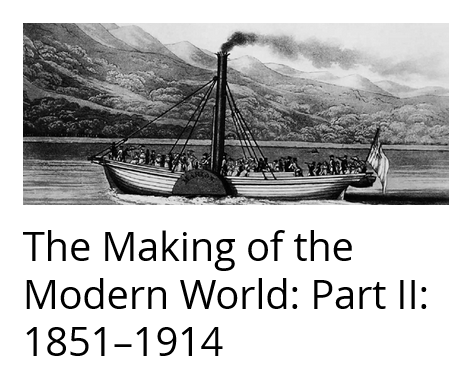
The Making of the Modern World Part II: 1851-1914 |
Kontakt/Bestellung
Contact/Order: info@digento.de 
|
|
Online |
|
|
Inhalt :: Content Online-Service mit Zugang zu rund 5.000 Titeln ökonomischer Primärliteratur im weiteren Sinn aus der Zeit von 1851 bis 1914 im kombinierten Volltext- und Faksimileformat. Die Titel aus verschiedenen Gebieten der europäischen Wirtschaftsgeschichte, vonen den etwa die Hälfte in englischer Sprache und die Hälfte in anderen Sprachen verfasst sind, stammen aus den folgenden bedeutenden Sammlungen zur Wirtschaftsgeschichte:
Die Originaldokumente können im Volltext durchsucht und als Faksimile mit Treffermarkierung dargestellt werden. |
|
|
Verlag :: Publisher Gale Cengage |
|
|
Preis :: Price
Preise auf Anfrage / Prices on request Siehe auch: |
|
|
Das Angebot richtet sich nicht an Verbraucher i. S. d. § 13 BGB und Letztverbraucher i. S. d. PAngV. |
|
|
Bestellnummer bei digento :: digento order number 107201 |
|
|
Verlagsinformation :: Publisher's information The Making of the Modern World, Part II: 1851–1914 takes The Making of Modern World series to the end of the nineteenth century. Comprised mainly of monographs, reports, correspondence, speeches, and surveys, this collection broadens Gale's international coverage of social, economic, and business history, as well as political science, technology, industrialization, and the birth of the modern corporation. The Making of the Modern World, Part II: 1851–1914 traces the progress of the nineteenth century nations' rapidly changing economies. The breadth and depth of the collection makes it an essential resource for historians allowing them to explore a range of material including, but not limited to, local reports, broad overviews, abstract analyses, reports on the financing of railways, economic textbooks, social polemics, and political speeches. Users can mine a wealth of topics ranging from nineteenth-century banking history and economic systems to social reform, debates over currency format, the increased interest in theories of valuation and the emerging issue of foreign exchange rates.
In page after page of primary source documents, researchers can evaluate the profound impact of the Industrial Revolution on the political and social conditions of nineteenth-century workers, factory owners and national economies.
Also unique is the large number of translations in the collection, useful to scholars concerned with the evolution of ideas in the history of economics as they flowed from one culture to another. Roughly 50 percent of the collection comprise of rare titles in languages other than English, including French, German, Portuguese, Scandinavian, Italian, and Spanish. Topics include:
Scholars will find the writings of well-known writers such as:
Platform Features & Tools
|
|
