|
Verlagsinformation :: Publisher's information
|
The Vertical Archive of the Casa de las Américas, Part 1: "Casa y Cultura"
|
|
|
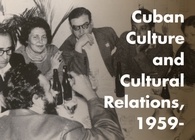
Casa de las Américas in Havana, Cuba, ranks among the most renowned cultural institutions in Latin America and the Caribbean. Ever since its creation in 1959, it has been a host to thousands of writers and artists from throughout the region. It has published countless books and articles, organized conferences, concerts, expositions, theatre productions and numerous cultural contests. Founded just three months after the Cuban Revolution, it quickly became a fundamental link between the cultural vanguard in Latin America and the Caribbean on the one hand and a diplomatically isolated Cuba on the other. Over the course of almost six decades it has amassed a vast amount of information, thus creating a unique record to study the history of both the institution itself as a cultural hub, but also that of the protagonists of a remarkable era.
Much of the information is preserved in the present "Casa y Cultura" section of the so-called Archivo Vertical at Casa de las Américas library. This section contains some 45,000 documents organized in 545 folders, covering such diverse materials as articles, newspaper clippings, cable messages, interviews, conference memorabilia, etc., collected from 1959 onward. Together they document the activities of the institution both in Cuba and beyond, bearing testimony to the conflicts and passions of a turbulent time. Conferences and controversies, manifestos and open letters combine to shed a light on a vibrant cultural history, which is now accessible for the first time from new and unexpected angles.
Beginnings
The archive's genesis was somewhat random; it started out collecting newspaper clippings (an external agency was in charge of compiling them) in order to keep track of the various activities of the Casa de las Américas. Gradually the collection began to grow as donors and librarians from different countries sent press clippings and other documents to the institute. Employees and researchers at the Casa itself contributed as well. Much of this constitutes ephemeral material, difficult to obtain as it derived from non-indexed sources (e.g. newspaper clippings) or consisted of unpublished articles (e.g. press dispatches). The employees at Casa de las Américas would use these documents for their own information or they would serve as promotional material for the different departments within the institute. Once they had served their purpose they would be sent to the library to be archived. In some cases there are notes in the margins or senders' requests, an interesting aspect when we consider the importance of some of its authors.
Writers and artists
Among the many documents, the programs of the monthly events at Casa de las Américas stand out (Programa del Mes). They allow us to establish a record of all public activities organized by the Casa since its founding. Other documents give insight in the plethora of colloquiums, meetings and conferences where intellectuals and artists from across Latin America and the Caribbean met. Here we find information about such illustrious figures as Miguel Angel Asturias, Alejo Carpentier, Fernando Benitez, Carlos Fuentes, Miguel Otero Silva, Simone de Beauvoir, Jean-Paul Sartre, Dario Fo and Mercedes Sosa, to name but a few. We also find information about the different departments of the institute: Theatre, Music, Visual Arts, Centre for Literary Research, Centre for Research on the Caribbean and Study Guides (on women, Latinos in the United States, cultures of Latin America and people of Afro-American descent). Also highly significant are the extensive files on the famous literary prize of the Casa de las Américas: the Premio Literario Casa de las Americas, which is by far the oldest and most ambitious one in the region.
Finally, the present section of the Archivo Vertical contains records about Haydee Santamaría, one of the most renowned women of the Cuban Revolution and the founder and president (until her death in 1980) of Casa de las Américas.
Features
- Unique access to 45,000 documents;
- Covering almost 60 years of cultural relations between Revolutionary Cuba and abroad;
- Full-text search functionality;
- Including MARC21 catalog records
|
|
The Vertical Archive of the Casa de las Américas, Part 2: Writers
|
|
|
Founded in Havana in 1959, only a few months after the Revolution, Casa de las Américas quickly developed into one of the most prestigious cultural centers in Latin America and the Caribbean. To a large extent its success and survival are the result of its capacity to establish a remarkable intellectual network around a common vision. When during the early years of the Revolution many foreign embassies closed their doors, Casa de las Américas offered a space for progressive minds to exchange information and discuss new ideas. Here, writers and artists from Latin America, the Caribbean and other parts of the world met and gave lectures, organized concerts and exhibitions, staged theater shows, conducted research, and found a place to publish their writings. The record of their activities, which continue to this day, are preserved in Casa de las Américas' archive, presented here in digital format for the first time.
Famous writers from the twentieth century form the core of the collection. Here one encounters such luminaries as Jorge Amado, Mario Benedetti, Roberto Bolaño, María Luisa Bombal, Jorge Luis Borges, Alejo Carpentier, Aimé Césaire, Julio Cortázar, Roque Dalton and Gabriel García Márquez, to name but a few. Some of the leading writers from the nineteenth century are also represented, including José Martí and the pioneer Brazilian novelist Machado de Assis. These world-renowned figures are accompanied by hundreds of their arguably less illustrious peers, who are nevertheless equally essential to illustrate the cultural climate and history of the era.
The Writers section of the Vertical Archive bears testimony to a vibrant culture, seen through the eyes of its protagonists. This online edition offers the user unprecedented access to the primary sources documenting a pivotal time in Cuban cultural history.
Features
- More than 63,800 dcouments
- Records on 1,046 writers and artists
- Full-text search functionality
- Including MARC21 catalog records
|
|
The Vertical Archive of the Casa de las Américas, Part 3: Theater
|
|
|
Rigorously accumulated, carefully preserved and meticulously cataloged, the theater collection at Casa de las Américas in Havana is a unique paper treasure. Amassed in over six decades, it is a source of immeasurable value for students and researchers as well as journalists, critics and cultural managers. The collection covers not only Cuba but the whole of Latin America and the Caribbean and even beyond.
Content
Clippings from newspapers and magazines – from announcements to reviews – coexist with telexes, photographs, design sketches, brochures, and catalogs. There are dossiers on theater groups and shows, allowing researchers to reconstruct the history of individual directors and performers as well as groups and artistic fashions. In addition, the programs of thousands of premieres are in themselves valuable objects. Often designed by notable artists, they offer an insight into design trends and their development over time.
Organization
The archive is organized by country. Within each folder there is a great thematic diversity, ranging from theater groups and personalities (actors, directors, playwrights, designers, musicians, etc.) to puppets, children's plays, circuses, and festivals. The time range is wide, with the oldest document dating from 1951 and the most recent one from 2018.
Geographic Coverage
The archive covers a total of thirty-five countries. Cuba is of course represented best, with folders on its National Theater, the theater activities at the Casa de las Américas, the Latin American and Caribbean Meetings of Theater Makers in the 1960s, the Carifesta Festival, and the International Theater School of Latin America and the Caribbean (EITALC). All other countries in the region are covered, from Argentina to Venezuela. One bulky folder is dedicated entirely to the famous Teatro La Candelaria in Bogotá, Colombia, founded in 1966 by Santiago García. The archive also includes folders on the United States and Canada, with the former focusing on Latino and Chicano theater. Other folders offer documentation on various European countries and the former Soviet Union. One folder deals with African theater.
The Theater collection complements the journal Conjunto, which was founded by the Guatemalan intellectual Manuel Galich in 1964 and is published by Casa de las Américas. The digital edition of Conjunto is forthcoming from Brill in 2021.
Features
- Unique access to 54,500 digital pages
- Covering almost seventy years of Latin American and Caribbean theater history
- Full-text search functionality
- Including MARC21 catalog records
|
|
The Vertical Archive of the Casa de las Américas, Part 4: Music
|
|
|
Music in Latin America is a universe of sound that reflects the region's rich cultural heritage. From the contagious rhythms of samba to the passionate melodies of bolero, Latin American music is the result of the intense process of transculturation developed over more than four centuries between the native populations and the diverse cultures brought from Europe, Africa and Asia. Each country in the hemisphere has shaped its own musical culture, bringing to the international scene such significant genres as Argentine tango, Colombian cumbia, Brazilian bossa nova, and Cuban son. These, as well as numerous other music and dance genres and expressions, are an effective means of celebrating and preserving the cultural identity of Latin American communities. Likewise, music is a space for recording the historical memory of peoples who have been able to turn song into a weapon of struggle, a cry of protest, or a call for unity and solidarity in the defense of their rights.
Accumulated over six decades, the Music section in the so-called "vertical archive" at Casa de las Américas documents musical developments in both Cuba, the Caribbean, and Latin America. In addition, it covers some European countries. This unique collection comprises 1,163 folders with various types of documents—press clippings, telexes, brochures, event programs, catalogs, photographs, etc. Both popular and academic events are documented, for instance in the form of concert announcements, reviews, and interviews.
The archive deals with a wide range of themes: musical personalities (performers, composers, directors, groups), festivals and events, musical genres, conferences, etc. The folders are organized by country; within the folders, documents are stored chronologically. Each folder gives access to documents about notable persons in the Cuban and Latin American cultural scene, music and musicology events in Cuba, and events taking place in Latin America between the 1960s and the present day. Within Latin American, especially Mexico, Chile, Brazil, Peru, Venezuela, and Puerto Rico are well represented.
The files about the 1960s, '70s and '80s are particularly noteworthy, since they allow researchers to track ground-breaking musical developments, such as the emergence of musical avant-gardes on the Continent, the Protest Song, the New Latin American Song (nueva canción) and the Cuban nueva trova. The archive is also rich on international musical events, including for instance the Latin American Contemporary Music Festival, the Caribbean Song Festival, Mexico's Cervantino Festival, Chile's Viña del Mar Song Festival, and the Teresa Carreño International Piano Competition in Miami.
Cuba, of course, is well covered, especially when it comes to events organized by Casa de las Américas. Extensive information is available on the 1967 Protest Song conference, the 1972 Latin American Music conference, the 1978 Guitarists from Latin America and the Caribbean conference, the 1983 Tango Yesterday and Today conference, and the 1997 Songs of the Rose and the Thorn conference. Of course, documentation about the music prizes awarded by Casa de las Américas for composition and musicology are not lacking.
Finally, scholars and students exploring the archive will find themselves rewarded with unparalleled records about all the great musicians who over the decades have performed in Cuba's concert halls.
Features
- Unique access to ca. 20,400 digital pages (full color)
- Covering over sixty years of Latin American and Caribbean music
- Folders on festivals, conferences, bands, and artists
- Full-text search functionality
- Scanned at the Casa de las Américas Library, Havana, Cuba
|
| The Vertical Archive of the Casa de las Américas, Part 5: Politics |
|
Casa de las Américas in Havana, Cuba, has a unique collection of sources on politics and history. Amassed over a period of sixty-five years, it covers both the history of Revolutionary Cuba as well as sociopolitical events and armed conflicts in the Caribbean and Latin America. The core of the collection is on Cuban political figures, notably Ernesto ‘Che’ Guevara and Fidel Castro. This astounding resource is now published in digital format for the first time.
The Archive
The so-called ‘Vertical Archive’ of Casa de las Américas was born in a somewhat haphazard way—starting with press clippings—with the aim of keeping a record of the activities organized by the institution. Gradually, the collection was expanded with material arriving from various countries, thanks to a wide network of correspondents. Much of it is ephemeral and difficult to obtain, coming from sources that have not been indexed or even been published. Other sources include Latin American newspapers and Cuban newspapers and periodicals, such as Granma, Bohemia, and Juventud Rebelde.
Che Guevara
The present collection constitutes the fifth and final part of the Vertical Archive. Particularly noteworthy is the section on Ernesto ‘Che’ Guevara. Comprising eight folders of close to two thousand documents, it is by far the largest section in the collection. It contains press clippings, speeches, interviews, letters, diaries, anecdotes and photos pertaining to the famous revolutionary. This remarkable resource allows researchers to study Che’s life and legacy and his economic, political and social thought in unparalleled detail. It covers Che as minister, his travels, and his involvement in the Congo Crisis and the guerrilla in Bolivia; The identification of his mortal remains and their transfer to Cuba; The funeral honors and the worldwide responses to his death: messages, tributes, books, poems, songs, films, monuments, and posters in his memory; Biographical data on his comrades in Bolivia; Interviews with his children, and much else.
Presidents and Revolutionaries
Other historical figures featured in the archive include Pedro Albizu Campos, a leading figure in the Puerto Rican independence movement, and the American activists Malcolm X and Martin Luther King, Jr. The archive also offers information on presidents past and present, such as Hugo Chávez, Néstor Kirchner, Jair Bolsonaro, Lula da Silva, Evo Morales, Andrés Manuel López Obrador, George W. Bush, Barack Obama, and Donald J. Trump. Regional organizations are covered as well, including for instance CELAC (the Community of Latin American and Caribbean States), ALBA-TCP (the Bolivarian Alliance for the Peoples of Our America – People’s Trade Treaty), OAS (Organization of American States), the Association of Caribbean States, Mercosur, UNASUR (Union of South American Nations), the Rio Group, and the Lima Group. In addition, there are files on various Ibero-American and Americas summits.
War and Peace
The archive is strong on insurgencies and armed struggle, with coverage of a range of conflicts and (para)military groups. Among them are guerrilla wars in Guatemala, the Dominican Republic and Mexico, the Puerto Rican independence fighters, the 1968 Tlatelolco massacre, the 1969 ‘Football War’ between Honduras and El Salvador, the 1973 coup d'état against the government of Salvador Allende in Chile, the Falklands War (1982), the Chiapas conflict of the 1990s, the Shining Path, Operation Just Cause (the 1989/90 U.S. invasion of Panama to seize General Manuel Noriega), and the peace process in Colombia (including some of its protagonists, such as FARC and the National Liberation Army, ELN). Also covered are some North-American events, for instance the September 11 attacks and the 2021 storming of the U.S. Capitol.
Cuba
When it comes to Cuba, the archive holds a rich variety of documents about people, historical events, legal, and social topics. Che Guevara and Fidel Castro figure prominently, but there is also plenty of documentation about recent and current politicians, from Raúl Castro to the current president, Miguel Díaz-Canel Bermúdez. Also covered are the Cuban constitution and Cuban legislation, the economy, migration agreements, women in Cuba, religion, race, human rights, and the Cuban community abroad. In addition, there are files on Operation Peter Pan (the mass evacuation of unaccompanied Cuban children to the United States in 1960–1962), Operation Carlota (the Cuban intervention in Angola), the Guantánamo Bay Naval Base, the alleged sonic attacks against U.S. diplomats (the ‘Havana syndrome’), the COVID-19 pandemic, and the anti-government protests that erupted in Havana on 11 July 2021.
Features
- Unique access to almost 30,000 digital pages (full color)
- Covering sixty-five years of Latin American and Caribbean politics and history
- Persons and topics included are Che Guevara and Fidel Castro, the Guantánamo Bay Naval Base, Cuban migration, and various armed conflicts in Latin America
- Full-text search functionality
- Including MARC21 catalog records
- Scanned at the Casa de las Américas Library, Havana, Cuba
|
|