|
|
|||
Novyi Mir Digital Archive (1925 to present) |
Kontakt/Bestellung
Contact/Order: info@digento.de 
|
|
Online |
|
|
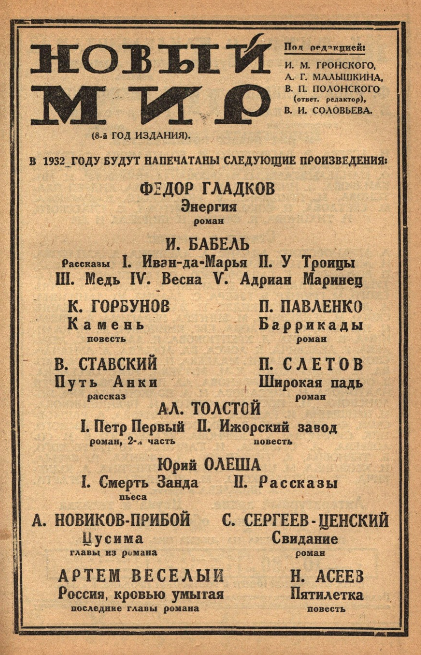
Inhalt :: Content Online-Service mit Zugang zu sämtlichen Ausgaben der einflussreichen russischen bzw. sowjetischen Literatur- und Politikzeitschrift Novy Mir (Новый мир, „Neue Welt“) von ihrer Gründung im Jahr 1925 bis in die Gegenwart im kombinierten Volltext- und Faksimileformat. Novy Mir gehört zu den historisch und kulturell bedeutendsten sogenannten „dicken Zeitschriften“ (Tolstyj Žurnal) Russlands. Das Archiv bietet direkten Einblick in den Wandel der staatlichen Propaganda, der gesellschaftlichen Zensur sowie die geheimen oder subversiven Diskurse innerhalb der sowjetischen Intellektuellenszene. Abgedeckter Zeitraum: 1925 ff. Updates: jährlich. |
|
|
Verlag :: Publisher Infoteka |
|
|
Preis :: Price Preise auf Anfrage / Prices on request |
|
|
Das Angebot richtet sich nicht an Verbraucher i. S. d. § 13 BGB und Letztverbraucher i. S. d. PAngV. |
|
|
Bestellnummer bei digento :: digento order number 109096 |
|
|
Verlagsinformation :: Publisher's information Novyi Mir (Новый мир, New World) is one of the most influential Russian literary journals of the twentieth century and a central institution of Soviet literary culture. Founded in 1925, it belonged to the tradition of Russian “thick journals,” which combined fiction, poetry, criticism, essays, and cultural debate. During the Soviet period, Novyi Mir became more than a literary periodical: it served as a major forum where the limits of permissible thought, historical truth, and moral responsibility were continually tested. The journal’s greatest importance is associated with the post-Stalin “Thaw,” especially under the editorship of Aleksandr Tvardovsky. During this period, Novyi Mir became known for serious, ethically engaged literature that challenged the silences and distortions of Stalinist culture without fully abandoning the Soviet literary framework. The journal’s most famous publication was Aleksandr Solzhenitsyn’s One Day in the Life of Ivan Denisovich in 1962, the first major Soviet-published literary work to portray the Gulag experience openly. The Novyi Mir Digital Archive is indispensable as both a literary archive and a record of Soviet intellectual life, allowing researchers to trace changing literary traditions, intellectual debates, and attitudes toward history, ideology, censorship, and cultural identity over the course of a century. The Novyi Mir Digital Archive offers scholars the most comprehensive collection available for this title, starting with the very first issue in 1925, and with an additional year’s worth of content available for purchase on an annual basis. It includes fully searchable scans of every issue, preserving the visual and textual richness of the original print editions, and is cross-searchable with numerous other Infoteka digital resources.
More about the Soviet “Thick Journals” The famed Soviet tolstye zhurnaly, or “thick journals,” were significant platforms for literary and intellectual discourse. Tolstye zhurnaly such as Novyi Mir played a complex and multifaceted role in Soviet intellectual and literary life. They were not merely publications but institutions that shaped and were shaped by the cultural, intellectual, and political currents of their time. These journals served multiple roles:
Key Stats
|
|